
Toronto is the epicenter of Canadian healthcare innovation. Anchored by the MaRS Discovery District and the legendary stretch of University Avenue known globally as "Hospital Row," Toronto represents one of the dense biomedical clusters on Earth. Here, world-renowned research institutes and hospital systems—including the University Health Network (UHN), Sunnybrook Health Sciences Centre, Mount Sinai Hospital, and The Hospital for Sick Children (SickKids)—collaborate with hundreds of high-growth digital health startups.
These emerging platforms are fundamentally transforming patient care through artificial intelligence diagnostics, remote patient monitoring, digital therapeutics, and cloud-native electronic medical records (EMR). However, connecting a digital health startup into Ontario's public healthcare infrastructure is an immensely regulated undertaking. Software developers do not merely write code; they handle Personal Health Information (PHI) governed by Ontario's Personal Health Information Protection Act (PHIPA) and enforced aggressively by the Information and Privacy Commissioner of Ontario (IPC).
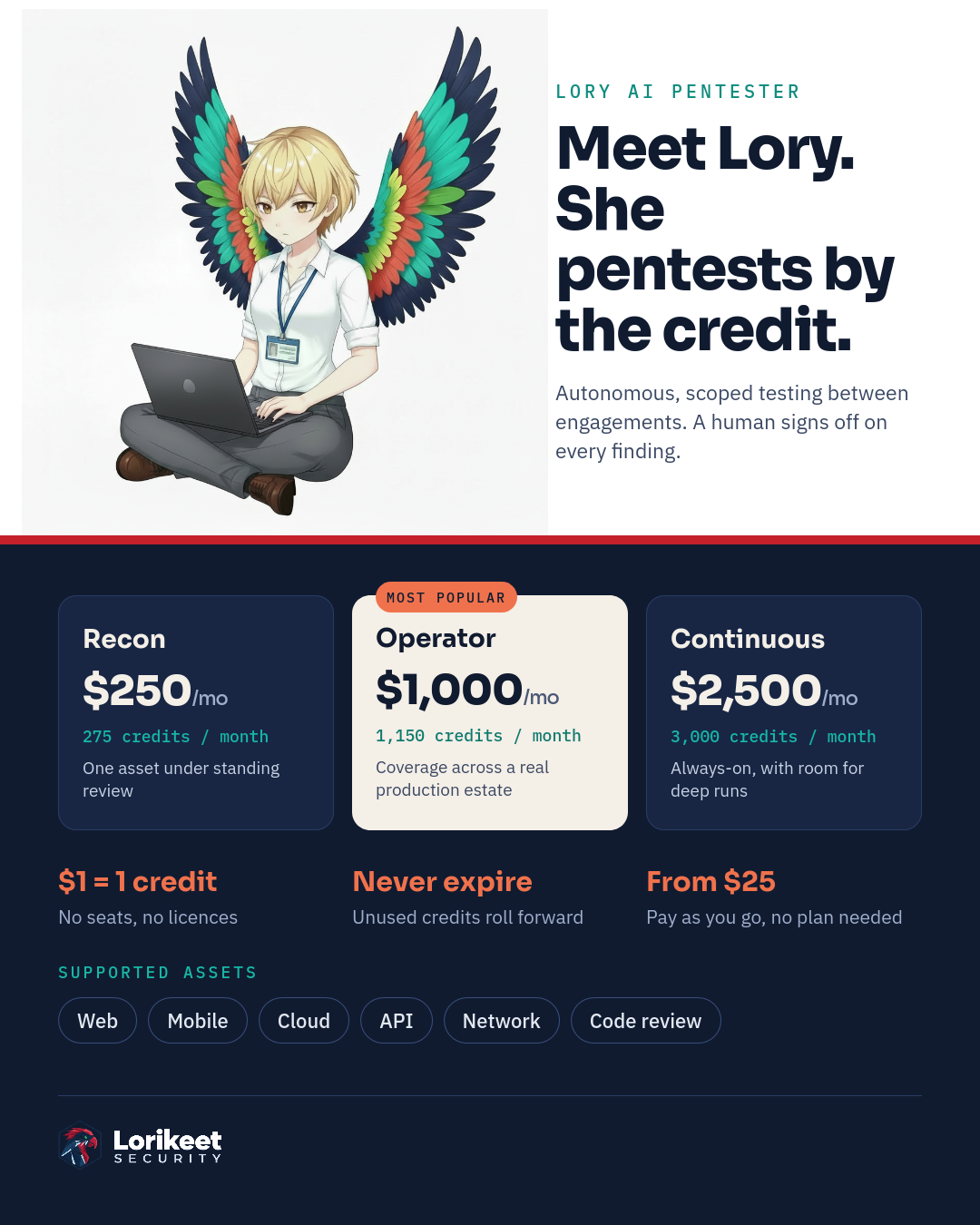
For healthtech founders, CTOs, and product security leaders, clearing hospital procurement hurdles and fulfilling PHIPA obligations requires far more than generic privacy policies. It demands rigorous, verified web application and API penetration testing. This guide breaks down PHIPA statutory mandates, details how to navigate hospital security reviews, analyzes common clinical API vulnerabilities (HL7/FHIR), and explains how continuous offensive testing with Talon PTaaS and Lory AI accelerates clinical deployment.

Understanding Ontario's PHIPA: The Statutory Mandate
Enacted in 2004 and updated with significant modern enforcement amendments, Ontario's Personal Health Information Protection Act (PHIPA) establishes the rules governing the collection, use, and disclosure of PHI. Unlike generic commercial privacy frameworks, PHIPA treats medical data with heightened legal sanctity, recognizing that a breach of health data inflicts irreversible reputational, emotional, and physical harm on patients.
Section 12(1): The Safeguards Duty
The foundational core of PHIPA's technical security requirements is articulated in Section 12(1):
"A health information custodian shall take steps that are reasonable in the circumstances to ensure that personal health information in the custodian's custody or control is protected against theft, loss and unauthorized use or disclosure and that the records containing the information are protected against unauthorized copying, modification or disposal."
In dozens of landmark breach investigation orders (such as IPC Orders HO-010, HO-013, and recent cloud platform investigations), the IPC has made it clear that "reasonable steps" include:
- Conducting independent, comprehensive Threat and Risk Assessments (TRAs).
- Executing rigorous, authenticated penetration testing against patient-facing interfaces, clinician portals, and underlying APIs prior to production launch and at least annually thereafter.
- Enforcing strict segregation of duties, continuous vulnerability management, and end-to-end encryption in transit (TLS 1.3) and at rest (AES-256).
Severe Penalties for Non-Compliance
Failing to secure PHI is no longer a matter of quiet reprimands. Legislative amendments under the Pandemic and Emergency Preparedness Act dramatically increased statutory penalties under PHIPA:
- Fines of up to CAD $200,000 and imprisonment up to one year for individuals.
- Corporate fines reaching up to CAD $1,000,000 for organizations convicted of an offense.
- Administrative Monetary Penalties (AMPs): The IPC has direct statutory power to issue binding financial penalties without requiring criminal prosecution.
- Civil Liability: Ontario courts have established that affected patients can pursue class-action lawsuits for the tort of "intrusion upon seclusion" following a health data breach resulting from inadequate technical safeguards.
Are You a HIC, HINP, or ESP? The Legal Classification Matrix
A critical source of confusion for Toronto healthtech founders is determining their exact legal status under PHIPA. How you are classified dictates your statutory security obligations:
1. Health Information Custodian (HIC)
HICs are the legally designated stewards of patient care. Under PHIPA, this includes public hospitals (UHN, Sunnybrook, SickKids), independent physician health networks, family health teams, long-term care homes, pharmacies, and medical laboratories. The HIC bears ultimate legal responsibility to patients for safeguarding PHI.
2. Electronic Service Provider (ESP)
An ESP is an entity that provides goods or services to an individual HIC to enable the HIC to use electronic means to collect, use, modify, disclose, retain, or dispose of PHI. Standard enterprise software vendors operating under a direct Business Associate-style agreement with a single clinic are typically ESPs. ESPs must not use PHI for any purpose other than providing the agreed service.
3. Health Information Network Provider (HINP)
Under Ontario Regulation 329/04 (Section 6), an organization is designated a HINP if it provides services to two or more HICs to enable them to electronically disclose, share, or transfer PHI between each other. Crucially, nearly every successful Toronto healthtech startup becomes a HINP the moment its software is deployed across multiple hospital networks or independent clinics.
HINPs are subject to rigorous statutory obligations that go far beyond standard SaaS requirements:
- Mandatory Written Security Assessments: Must conduct and provide formal TRAs and third-party penetration testing reports to every connected HIC.
- Strict Audit Logging: Must log every transaction, viewing, modification, and transmission of PHI, retaining immutable audit trails accessible to HICs upon demand.
- Breach Notification: Must immediately notify all affected HICs in writing at the first reasonable opportunity following any security breach or unauthorized access event.
The HINP Compliance Trap: If your digital health platform connects Family Health Teams with UHN specialists, or facilitates diagnostic referrals across multiple clinics, you are operating as a HINP under Ontario law. Hospital procurement officers will halt vendor onboarding immediately if you cannot provide a third-party penetration test validating your multi-tenant isolation safeguards.
Navigating Hospital Row: UHN, Sunnybrook & SickKids Vendor Procurement
Selling software into Toronto's public healthcare sector is notoriously rigorous. Hospital procurement committees, Chief Information Officers, and Clinical Informatics teams operate under zero-tolerance risk mandates. When your startup pitches a solution to the University Health Network (encompassing Toronto General, Toronto Western, Princess Margaret Cancer Centre, and Toronto Rehab), Sunnybrook Health Sciences Centre, or SickKids, you must navigate a multi-layered security gauntlet:
1. Joint Hospital Vendor Security Assessment (VSA)
Hospitals will mandate the completion of extensive vendor risk questionnaires (often exceeding 200 security questions) probing data governance, cryptographic key ownership, identity federation (SAML/Okta), incident response playbooks, and disaster recovery recovery point objectives (RPO/RTO).
2. Mandatory Independent Third-Party Penetration Test
Hospital risk committees explicitly refuse to accept internal self-attestations or automated vulnerability scan reports from tools like Nessus or OWASP ZAP. You must provide a comprehensive, independent penetration testing report conducted by a certified offensive security firm within the preceding 12 months. The report must prove:
- No unmitigated Critical or High severity findings remain active.
- Authenticated testing was executed across administrative and patient role boundaries.
- Deep testing of application business logic and API endpoints was manually performed.
3. Canadian Data Residency Guarantee
Ontario hospital bylaws and public sector procurement directives strictly forbid hosting patient data in foreign cloud regions subject to the US CLOUD Act or foreign extraterritorial surveillance. Your infrastructure must reside in Canadian sovereign data centers (such as AWS ca-central-1 in Montreal or Azure Canada Central in Toronto). Penetration testing must explicitly verify that staging data and test environments adhere to these geographic boundaries.
Technical Deep Dive: Common Vulnerabilities in Patient Portals
Patient portals represent the primary digital interface between Ontario patients and healthcare providers. During penetration testing of digital health platforms, our offensive researchers routinely identify serious architectural vulnerabilities:
1. Broken Object Level Authorization (BOLA / IDOR)
BOLA remains the single most devastating vulnerability in digital health platforms. Because modern healthtech applications decouple frontend interfaces from backend microservices via REST or GraphQL APIs, authorization checks must be strictly enforced at the object level for every single database query.
In vulnerable systems, a patient logged in with ID pat_1042 can view their own lab results at /api/v1/patients/pat_1042/lab-results. By simply modifying the path parameter to pat_1043, the backend returns the diagnostic record of an entirely different patient, completely bypassing UI restrictions.
2. Unauthenticated PACS & DICOM Imaging Exfiltration
Many digital health platforms integrate Picture Archiving and Communication Systems (PACS) to allow clinicians and patients to view CT scans, X-rays, and MRIs online. Developers often expose raw Digital Imaging and Communications in Medicine (DICOM) Web viewers (e.g., OHIF Viewer, Orthanc, or CornerStone.js) without binding session cookies to the underlying DICOMweb WADO-RS endpoints. Attackers can iterate through patient study instance UIDs (StudyInstanceUID) and bulk-download unencrypted patient medical imagery directly from public S3 or Azure Blob storage buckets.
3. Telehealth Session Hijacking & WebRTC Signaling Flaws
Virtual appointment platforms rely on WebRTC for real-time video communication. While WebRTC encrypts peer-to-peer media streams with DTLS-SRTP, the initial signaling channel (typically implemented via WebSockets) frequently contains critical authorization bypasses. If the signaling server fails to authenticate meeting room IDs, an attacker can silently join private psychiatric or clinical consultations without appearing in the UI participant list.
HL7 & FHIR API Penetration Testing: The Clinical Core
Modern Canadian healthtech platforms are rapidly transitioning away from legacy pipe-delimited HL7 v2 messages toward modern HL7 FHIR (Fast Healthcare Interoperability Resources) RESTful APIs. Penetration testing of FHIR implementations requires specialized clinical domain knowledge:
1. SMART on FHIR Scope Escalation
The SMART on FHIR standard defines how apps launch securely against clinical EMRs (such as Epic, Cerner, or Telus Collaborative Health Record) using OAuth 2.0. The standard relies on strict scope strings, such as:
patient/Patient.read(Read the currently selected patient's demographic record).user/*.read(Read clinical records for any patient the logged-in clinician has access to).system/*.read(Backend system access without human context).
During penetration testing, our operators attempt OAuth Scope Escalation: requesting elevated scopes during the authorization code exchange, injecting wildcard permissions, or manipulating token refresh requests to bypass administrative consent barriers.
2. Bulk Data Access Abuse ($export)
The FHIR Bulk Data Access specification ($export) enables large-scale extraction of population health data. If an application implements the /Patient/$export or /Group/{id}/$export operation without strict rate limiting, multi-factor authorization, and independent audit triggers, an attacker with compromised low-privilege credentials can initiate a full database dump, exfiltrating tens of thousands of Ontario patient histories in seconds.
PHIPA Technical Requirements vs. Penetration Testing Evidence
The following structured comparison illustrates how Lorikeet Security's offensive methodology directly produces the technical evidence required by Ontario health privacy regulations:
| PHIPA Section / Mandate | Healthcare Risk Area | Lorikeet Security Offensive Test Case & Evidence |
|---|---|---|
| Section 12(1): Safeguards Duty | Unauthorized viewing or theft of electronic health records. | Multi-Tenant Isolation Testing: Aggressive BOLA/IDOR probing across patient, nurse, physician, and admin roles to verify zero cross-tenant data bleed. |
| O. Reg 329/04 Sec 6 (HINP Logging) | Failure to maintain immutable audit trails of all PHI access events. | Audit Evasion Testing: Attempting administrative modifications, record exports, and credential changes while verifying that SIEM and database audit logs capture every forensic detail. |
| Section 13: Integrity & Accuracy | Unauthorized alteration or malicious deletion of clinical notes or dosage data. | API Input Validation & Injection Testing: Probing GraphQL mutations, REST endpoints, and database interpreters against SQLi, NoSQLi, and race conditions that could corrupt clinical records. |
| Section 15: Agent Authorization | Privilege escalation by third-party contractor or compromised support account. | Role-Based Access Control (RBAC) Assessment: Testing vertical and horizontal privilege escalation, OAuth token forgery, and session fixation vulnerabilities across all portal modules. |
| Hospital VSA Requirements | Denial of Service disabling emergency room or clinic communication portals. | Layer 7 Resilience & Rate-Limit Testing: Validating that authentication endpoints, report generators, and search queries gracefully withstand resource exhaustion without crashing. |
Legacy Healthcare Audits vs. Continuous PTaaS with Talon
Traditional healthcare consulting firms treat security as an annual chore, producing massive paper binders that sit on shelves while software changes daily. In contrast, modern healthtech startups shipping code weekly require continuous assurance.
| Evaluation Criterion | Traditional Canadian Consulting Firms | Talon PTaaS by Lorikeet Security |
|---|---|---|
| Assessment Speed | 4 to 8 weeks to schedule and complete; delays clinical launches. | Rapid Kickoff (48 Hours): Immediate onboarding with continuous findings streaming. |
| Clinical Domain Knowledge | Generic IT auditors unfamiliar with HL7, FHIR, or DICOM standards. | Specialized Healthcare Offensive Team: Deep expertise in SMART on FHIR, PACS/DICOM, and PHIPA law. |
| Hospital Procurement Deliverables | Static PDF report requiring manual translation for hospital reviewers. | Hospital-Ready GRC Package: 1-click auditor summaries, executive attestations, and verified retests. |
| Developer Remediation Experience | Vague textual recommendations; zero engineer integration. | Developer-First Native Sync: Direct export to Jira/GitHub/Linear with curl reproduction commands. |
| Cost Structure | CAD $25,000 to $45,000 per one-time assessment with costly retest fees. | Predictable Subscription: Transparent monthly or annual tiers with complimentary retesting. |
HealthTech Scoping Blueprint: Preparing for Your PHIPA Pentest
When preparing to engage Lorikeet Security for your PHIPA penetration test, following this checklist ensures maximum offensive coverage while protecting patient safety:
- Strictly Use Synthetic Staging Data: Never conduct penetration testing against live, identifiable patient health records. We collaborate with your engineers to deploy a staging replica populated with high-fidelity, synthetic patient datasets (using tools like Synthea) that mirror real clinical schemas without privacy risk.
- Provide API Documentation Under NDA: Sharing OpenAPI/Swagger specifications, Postman collections, and FHIR Capability Statements allows our offensive researchers to bypass basic discovery and immediately focus testing on high-risk clinical business logic and authorization boundaries.
- Configure Multiple Privilege Test Accounts: Prepare credentials for at least four user roles: Unauthenticated Public User, Standard Patient, Clinical Provider (Physician/Nurse), and System Superadministrator.
- Map Downstream Integrations: Identify any third-party APIs (e.g., e-Prescribing gateways, lab result aggregators, or SMS appointment reminder services) to establish strict testing boundaries and prevent unintended automated messages to real end-users.
Frequently Asked Questions
Under Section 12(1) of the Personal Health Information Protection Act (PHIPA), Health Information Custodians (HICs) and their service providers must take reasonable steps to ensure that personal health information (PHI) is protected against theft, loss, and unauthorized access. The Information and Privacy Commissioner of Ontario (IPC) has repeatedly interpreted this to require formal Threat and Risk Assessments (TRAs), independent third-party penetration testing, and annual vulnerability audits before and after connecting digital health software to clinical environments.
An Electronic Service Provider (ESP) provides IT or software services to a single Health Information Custodian without directly accessing or managing PHI across organizational boundaries. In contrast, a Health Information Network Provider (HINP) provides services to two or more HICs to enable them to electronically disclose, share, or access PHI. Under Ontario Regulation 329/04, HINPs are subject to strict mandatory obligations, including maintaining third-party security audits, logging all PHI access, performing continuous vulnerability management, and providing formal written security assessments.
Toronto's major hospital networks enforce rigorous procurement security vetting managed by Joint Hospital Security Committees and Clinical Informatics teams. Vendors must complete detailed Vendor Security Assessments (VSA), provide an independent third-party penetration test report conducted within the last 12 months (mapping to OWASP Top 10 and WSTG), demonstrate SOC 2 Type II or ISO 27001 certification, show Canadian data residency (AWS ca-central-1 or Azure Canada Central), and provide verified clean retest reports for any high or critical findings.
The most frequent vulnerabilities in healthcare APIs include Broken Object Level Authorization (BOLA), allowing unauthorized retrieval of other patients' diagnostic records; SMART on FHIR token scope escalation, where an app with 'patient/*.read' accesses clinical provider resources; improper pagination leading to server exhaustion; missing rate limits on prescription or appointment mutations; and unauthenticated exposure of DICOM medical imaging metadata in PACS web viewers.
Under modern amendments to PHIPA, individuals convicted of an offence are subject to fines of up to CAD $200,000 and imprisonment for up to one year, while corporations face fines of up to CAD $1,000,000. Additionally, the Information and Privacy Commissioner of Ontario (IPC) possesses administrative monetary penalty powers to fine non-compliant entities, and affected patients have a statutory right to sue for damages resulting from an intentional or negligent breach of their personal health information.
Accelerate Your Clinical Deployments with Lorikeet Security
Pass hospital security reviews at UHN, Sunnybrook, and SickKids with confidence. Lorikeet Security delivers specialized PHIPA penetration testing and continuous offensive assurance tailored for Toronto digital health pioneers.